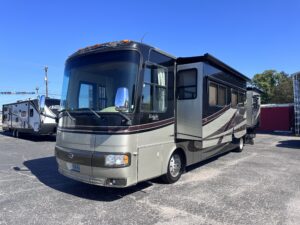
An RV slide-out motor should move the room smoothly, steadily, and with enough power to extend or retract the slide without drama. So when you press the switch and hear clicking instead of movement, or the slide moves a little and then clicks repeatedly, something is stopping the system from completing the job. That clicking sound may be electrical, mechanical, or a sign that the motor is trying to work but cannot move the slide under load.
If you have been asking, “Why Is My RV Slide-Out Motor Clicking?” the answer usually comes down to weak battery voltage, poor wiring connections, a bad ground, failed motor, stripped gears, a stuck slide room, controller issues, worn relays, or a slide mechanism that is binding.
The important part is not holding the switch forever while the motor clicks. Repeatedly trying to force the slide can overheat the motor, damage gears, strip tracks, burn wiring, or make the slide harder to repair.
Why Is My RV Slide-Out Motor Clicking When I Press The Switch?
A slide-out system uses a motor or motors to move a heavy room in and out of the RV wall opening. Depending on the RV, the slide may use a rack-and-pinion system, cable system, Schwintek-style rail system, hydraulic system with electric pump, or another mechanism. The motor needs strong power, clean connections, proper alignment, and a free-moving slide to work correctly.
Common symptoms include:
- Clicking when pressing the slide switch
- Slide does not move at all
- Slide moves a few inches, then stops
- One side moves while the other does not
- Lights dim when the switch is pressed
- Motor clicks rapidly
- Slide makes a clunking or grinding sound
- Slide works sometimes and fails other times
A clear sentence for the record: Why Is My RV Slide-Out Motor Clicking? Often because the motor is not getting enough power, the slide is binding, the gears are damaged, or the controller/relay is trying to activate but cannot complete the movement.
Weak Battery Voltage
Weak battery voltage is one of the most common causes of slide-out clicking. Slide motors draw a lot of current. Even if the lights still work, the battery may not have enough power to move a heavy slide room.
Low-voltage clues include:
- Interior lights dim when the slide switch is pressed
- Slide moves slowly before clicking
- Slide works better when plugged into shore power
- Battery monitor shows low charge
- Other 12V systems act weak
- Clicking happens after the RV has been sitting
This is especially common when the slide is operated before the battery is fully charged. Large slide rooms need strong 12V power. If voltage drops too low under load, the motor may click, stall, or stop before the room moves.
For slide-out electrical issues, weak battery symptoms, and 12V system testing, Daisy RV can inspect the battery, wiring, and slide motor before parts are replaced unnecessarily.
Loose Or Corroded Battery Connections
Even with a good battery, the slide motor cannot work properly if power cannot reach it. Loose battery terminals, corroded cable ends, weak grounds, damaged fuses, or poor connections can cause voltage drop. The motor may click because it receives enough power to activate, but not enough to move the slide.
Connection-related symptoms include:
- Slide works intermittently
- Clicking changes when cables are moved
- Battery terminals are corroded
- Slide fails after travel
- Other electrical systems flicker
- Motor sounds weak under load
- Problem gets worse over time
This is one of the most overlooked answers to “Why Is My RV Slide-Out Motor Clicking?” because the battery may test okay while the cable connections fail under load.
Slide circuits need clean, tight, heavy-duty connections. A tiny bit of corrosion can create a lot of resistance when the motor tries to pull high current.
Bad Ground Connection
A bad ground can create the same symptoms as a weak battery or bad motor. The slide system needs both power and ground to complete the circuit. If the ground connection is rusty, loose, damaged, or poorly attached to the frame, the motor may click without moving the slide.
Bad ground signs include:
- Slide works randomly
- Clicking happens under load
- Motor acts weak
- Other nearby 12V systems behave strangely
- Problem changes after bumps or travel
- Ground wire looks corroded or loose
Ground problems can be frustrating because they may not fail completely. The slide may work one day and click the next. That is why testing voltage under load matters.
Slide Room Is Binding
Sometimes the motor clicks because the slide is physically stuck. If the slide room is crooked, jammed, out of alignment, or dragging on one side, the motor may not have enough force to move it. The clicking may be a relay, clutch, gearbox, or motor trying and failing to overcome resistance.
Slide binding may be caused by:
- Debris in the slide path
- Damaged rollers
- Misaligned tracks
- Worn gears
- Loose hardware
- Slide seal caught or folded
- Room out of square
- Soft floor or wall damage
- Obstruction inside the RV
Before operating the slide, check both inside and outside. A chair, cabinet door, rug, loose trim piece, storage item, or folded seal can stop the room from moving correctly.
A slide-out is powerful enough to damage itself. It will not politely explain that a throw rug is in the way. It will just click, strain, or break something expensive.
Stripped Gears Or Damaged Drive Components
If the motor runs or clicks but the slide does not move, the drive system may be damaged. Gears, rails, sprockets, shafts, cables, or couplers can wear or strip over time. If a gear no longer grips properly, the motor may activate without actually moving the room.
Mechanical damage may cause:
- Clicking or popping sounds
- Grinding near the track
- One side moving differently
- Slide stuck halfway
- Motor runs but room does not move
- Metal shavings near the mechanism
- Slide jumps or slips while moving
For slide-out motor clicking, gear damage, track issues, and room alignment problems, Daisy RV can inspect the mechanism and find whether the problem is electrical or mechanical.
Failed Slide-Out Motor
The slide motor itself can fail. Motors can wear out from age, water intrusion, overheating, repeated strain, poor voltage, or being forced to move a binding slide. A failing motor may click, hum, stop under load, or work only sometimes.
Motor failure signs include:
- Motor clicks but does not turn
- Motor hums and gets hot
- Slide moves only with assistance
- Motor works when unloaded but not under load
- Burning smell near the motor
- Slide has been slow for a while
- Motor failure follows repeated binding
A bad motor should be confirmed with testing before replacement. If the slide is binding, a new motor may fail again unless the root cause is corrected.
Relay, Controller, Or Switch Problem
Some slide systems use relays, control modules, or circuit boards to send power to the motor. A clicking sound may come from a relay trying to close. If the relay is weak, the controller is faulting, or the switch is failing, the motor may not receive full power.
Control-related symptoms include:
- Clicking comes from a control box
- Slide does not respond consistently
- Switch has to be held at an angle
- One direction works but the other does not
- Controller flashes a code
- Slide resets temporarily
- Multiple motors do not sync
If the clicking is not coming from the motor area, listen for where it originates. A clicking relay in a cabinet or control box points to a different repair path than clicking at the slide motor itself.
Slide Motors Out Of Sync
Some slide systems use more than one motor. If those motors get out of sync, one side may bind while the other side tries to move. The controller may stop operation, click, or refuse to move the slide until the system is reset or synchronized.
Out-of-sync symptoms include:
- One side moves before the other
- Slide sits crooked
- Controller stops the slide
- Clicking happens after uneven movement
- Slide was stopped mid-cycle
- Room does not fully close or extend
This is another important answer to “Why Is My RV Slide-Out Motor Clicking?” because the motor may not be dead. The controller may be preventing movement because the room is not moving evenly.
What You Can Check Safely
Start by checking battery voltage. If the batteries are low, charge them before operating the slide again.
Next, make sure the RV is stable and the slide path is clear. Check inside and outside for obstructions, folded seals, loose trim, or anything touching the room.
Listen carefully to where the clicking comes from. A click at the motor area, control box, relay, or battery compartment can point to different causes.
Check battery terminals for corrosion or looseness. If connections look dirty or weak, they need attention before slide diagnosis continues.
Do not keep holding the switch if the slide is clicking and not moving. That can overheat the motor or damage the control system.
If you are still asking, “Why Is My RV Slide-Out Motor Clicking?” after checking power and obstructions, the slide system needs professional diagnosis.
When It Is Time For Professional Diagnosis
You should schedule service if:
- Slide clicks but does not move
- Slide moves only a few inches
- One side moves and the other does not
- Lights dim heavily when pressing the switch
- Battery is charged but clicking continues
- Slide room is crooked
- Motor hums or gets hot
- Grinding, popping, or slipping is present
- Controller or relay clicks repeatedly
Professional diagnosis may include testing battery voltage under load, checking fuses and breakers, inspecting wiring, testing grounds, checking motor output, inspecting gears, checking slide alignment, testing controller function, and verifying the room is not binding.
Why You Should Not Ignore Slide Motor Clicking
A clicking slide motor can lead to:
- Stuck slide room
- Burned motor
- Stripped gears
- Damaged tracks
- Torn seals
- Water leaks
- Controller failure
- Wiring damage
- Expensive slide repairs
A slide stuck open or halfway closed can quickly become a serious travel problem. It is much easier to repair early clicking than to deal with a slide that will not retract before leaving a campsite.
Prevention Tips To Keep Your Slide-Out Moving Smoothly
Keep batteries fully charged.
Operate slides only with strong 12V power.
Check the slide path before moving the room.
Keep seals clean and conditioned when appropriate.
Do not stop the slide mid-cycle unless necessary.
Listen for new noises.
Inspect for uneven movement.
Address slow slide operation early.
Keep tracks and mechanisms maintained.
Schedule service if the slide starts binding.
A slide-out should move smoothly and evenly. Clicking is a warning that the system is struggling.
Call To Action: Get Your Slide-Out Motor Checked
If you are still wondering, “Why Is My RV Slide-Out Motor Clicking?”, start with the basics: check battery charge, cable connections, grounds, fuses, slide path, seals, and whether the room is moving evenly.
If the clicking continues, book an appointment with Daisy RV and get your slide-out motor, wiring, controller, gears, tracks, seals, and alignment inspected properly. Your slide-out should move in and out cleanly, not click repeatedly like it is thinking about the request and declining.